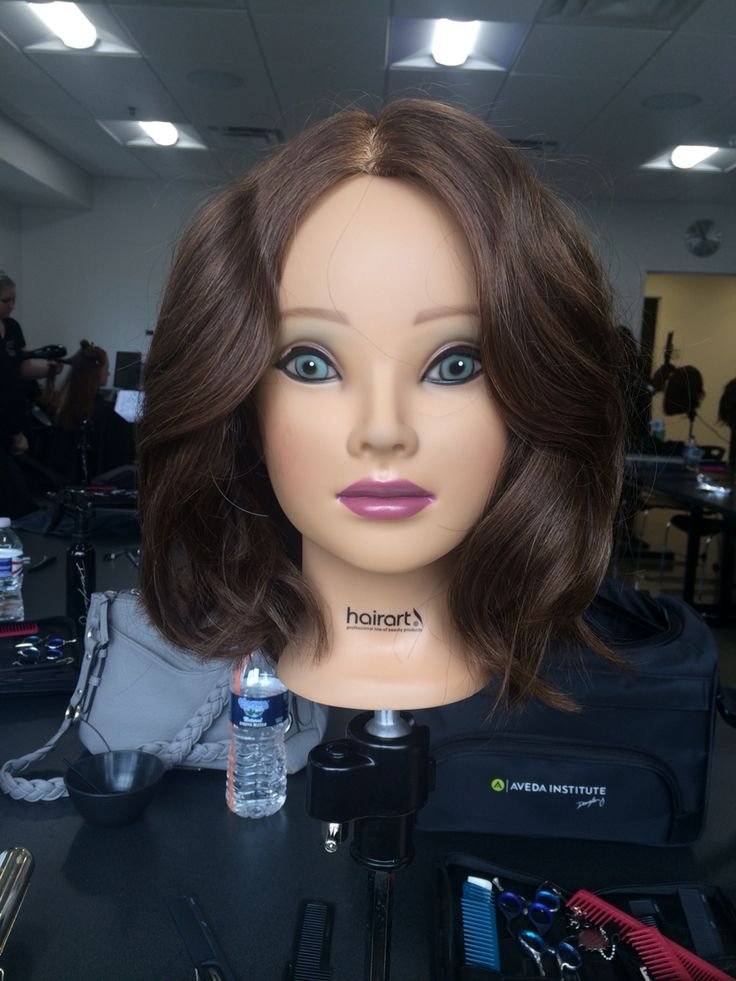
Few hairstyles have left as indelible a mark on history, fashion, and culture as the Marcel Wave. More than just a coiffure, it was a defining characteristic of an entire era, a symbol of sophistication, modernity, and a touch of rebellion. The History and Evolution of Marcel Waves isn't merely a tale of hair styling; it's a fascinating journey through technological innovation, celebrity influence, and societal shifts that saw a meticulously crafted wave become the pinnacle of elegance for over fifty years.
Imagine a time before electric curling irons, before regulated heat, when creating perfectly sculpted waves was a painstaking art, often achieved with dangerous, primitive tools. That was the world into which the Marcel Wave emerged, forever changing how women (and even some men) styled their hair, setting a standard of glamour that echoed from Parisian salons to Hollywood silver screens.
At a Glance: What You'll Discover
- The Unsung Hero: Meet Francois Marcel Grateau, the French hairdresser whose ingenuity in the 1870s gave the world this iconic style.
- A Technical Marvel: Understand the original, often perilous, method of creating Marcel Waves with heated tongs over a gas flame.
- The Golden Age: How the Marcel Wave became the quintessential look of the Roaring Twenties and beyond, gracing the heads of flappers, film stars, and fashionable women worldwide.
- Tools of the Trade: Trace the evolution of the Marcel iron from rudimentary tongs to electric wonders.
- Marcel's Broader Legacy: Discover how the inventor's innovative spirit extended far beyond just "the wave" into other permanent waving technologies.
- Enduring Impact: How this classic style continues to inspire modern beauty trends and represents a timeless aesthetic.
The Dawn of the Wave: Who Was Marcel?
Every revolution has its architect, and for the Marcel Wave, that visionary was a man known to history by several names: Marcel Grateau, Francois R. Marcel, and most completely, Francois Marcel Grateau. Born in France in 1852, Grateau would go on to patent a range of hairdressing innovations, but none would achieve the fame of his signature "undulation."
The Man Behind the Mystique: Francois Marcel Grateau
The conflicting names attached to Marcel are a testament to his elusive fame and perhaps the changing personal identities common among immigrants and those seeking to make a name for themselves. While various records show him as Francois Marcel Woelffle, who later legally changed his name to Marcel, and then adopted the middle name Rene, his obituary in 1936 confidently identified him as Francois Marcel Grateau. Regardless of the exact moniker, his genius was undeniable. It was in 1872 that Grateau, at the young age of 20, first unveiled his revolutionary technique, sparking a global sensation that would endure for decades.
A Humble Beginning in Montmartre
Marcel Grateau started his journey in the bustling, bohemian district of Montmartre, Paris, in the 1870s. His salon catered primarily to the working class, a far cry from the opulent establishments of the city's elite. In these early days, developing his distinctive waving method was a struggle. Hairdressing, like any craft, required practice, and Marcel found himself offering free services to perfect his technique and build a portfolio of beautifully waved hair.
It wasn't long before the visible results of his labor began to draw attention. As his early models showcased their elegantly sculpted hair, word of mouth spread. Gradually, paying customers started to trickle in. While his poorer clientele visited his Montmartre salon, Marcel cleverly expanded his reach, making house calls to serve the city's wealthier residents, bringing his innovative styling directly to their private chambers.
The Breakthrough Moment: Jane Hading's Hair
Marcel's big break arrived when he styled the hair of the renowned actress Jane Hading. A celebrated figure of her time, Hading's public appearances were closely scrutinized, and her new, exquisitely waved coiffure became an instant sensation. The publicity generated was immense, transforming Marcel from a local talent into a national, then international, phenomenon. He masterfully capitalized on this newfound fame, cementing his position as the leading hairdresser of his generation. His innovative approach, combined with Hading's star power, effectively launched the Marcel Wave into the stratosphere of fashion.
Mastering the Undulation: The Original Marcel Wave Technique
Before the Marcel Wave, hair styling largely consisted of simple curls or elaborate up-dos. Marcel's creation introduced a new fluidity, a soft yet structured wave that appeared natural, defying the stiff, artificial look of many earlier styles.
From "Undulation Marcel" to Icon
Initially known as the "Undulation Marcel," the name quickly evolved into the more common and memorable "Marcel Wave." This name change reflects the style's growing recognition and its transformation into a household term synonymous with elegance. For over fifty years, from the late 19th century through the flapper era of the 1920s and well into the 1930s, the Marcel Wave remained the gold standard of fashionable hair. It brought immense fortune to its inventor and revolutionized the art of hairdressing worldwide.
The Primitive Genius of Early Irons: L. Pelleray's Tongs
The tools of the trade for creating these exquisite waves were initially far from sophisticated. L. Pelleray of Paris manufactured the first Marcel irons, which were heavy tongs with smooth, rounded internal surfaces. These weren't your grandmother's curling irons; they were specialized instruments designed to create a deep, natural-looking wave rather than a tight, round curl.
The hairdresser's skill was paramount. It wasn't just about clamping the hair; it required a trained operator to manipulate the tongs in a specific way, rolling and pressing the hair to achieve the characteristic "S" shape of the wave. This intricate dance of hand and tool separated the master from the novice.
The Art and Peril of a Hot Iron
Perhaps the most challenging aspect of early Marcel waving was temperature control. The tongs were heated over a rectangular gas burner, typically six to seven inches long and two inches wide. As you can imagine, maintaining a consistent and correct temperature with such primitive equipment was an art in itself.
- Too cool: The wave wouldn't set, leaving the hair limp and unstyled.
- Too hot: The hair could easily be scorched or burnt, a terrifying prospect for both client and stylist.
To avoid disaster, hairdressers would meticulously test the iron on a piece of paper before applying it to a client's hair. If the paper singed or burnt, the iron was too hot, signaling a need for caution and adjustment. This painstaking process highlights the dedication and expertise required to master the Marcel Wave in its early days, making its widespread popularity even more impressive.
The Roaring Twenties and Beyond: Marcel Waves Dominate Fashion
While invented in the 1870s, the Marcel Wave truly came into its own during the 1920s. As societal norms shifted and women gained greater freedom, the bob became the fashionable cut, and the Marcel Wave provided the perfect elegant finish for this shorter, more daring style.
A Symbol of Sophistication and Rebellion
The Roaring Twenties ushered in an era of unprecedented social change, and hairstyles were no exception. The Marcel Wave, with its sleek, undulating perfection, perfectly complemented the rebellious spirit of the flapper. It exuded sophistication and a modern sensibility, moving away from the elaborate, restrictive styles of the Victorian and Edwardian eras. Women felt empowered by their new, shorter hair and the ability to embrace a chic, artful wave that spoke of independence and style.
Celebrities and the Silver Screen: Spreading the Trend
Just as Jane Hading propelled Marcel to initial fame, the burgeoning film industry of the 1920s cemented the Marcel Wave's status as a must-have style. Actresses like Josephine Baker, Clara Bow, and Mary Pickford, with their perfectly coiffed waves, became style icons. Their images, broadcast across the globe through cinema, ensured that the Marcel Wave became universally recognized and desired. Every woman wanted to emulate the glamour of Hollywood, and the Marcel Wave was the easiest way to achieve that silver-screen allure.
Evolution of the Tools: The Rise of Electric Irons
The widespread demand for the Marcel Wave spurred further innovation in hairdressing tools. The precarious gas-heated tongs, while effective, were cumbersome and presented significant risks. By 1924, a major leap forward occurred with the introduction of electric waving irons. These new tools offered a crucial advantage: regulated temperature control. This innovation made the waving process safer, more consistent, and more accessible to a broader range of stylists and clients.
Initially, Marcel irons were available in four distinct sizes – A, B, C, and D – allowing for variations in wave depth and tightness based on individual preference. The pursuit of perfection continued, and by 1933, an adjustable iron was developed, offering even greater versatility and control to the hairdresser. Today, modern equivalents, like gold-plated and ceramic marcel irons, have eliminated most of the risks and problems associated with their early predecessors, making the classic wave easier than ever to achieve. To dive deeper into the tools that made this iconic style possible, you can Learn about the marcel iron.
Beyond the Wave: Marcel's Legacy of Innovation
While the Marcel Wave might be his most famous invention, Francois Marcel Grateau was a prolific inventor whose contributions stretched far beyond a single hairstyle. His relentless pursuit of improving hairdressing techniques and tools left an indelible mark on the industry.
From Permanent Waves to Clippers: A Patent Prolific Inventor
Marcel's inventive spirit didn't wane after perfecting his signature wave. He continued to innovate throughout his life, developing a range of specialized hair waving equipment that shaped the future of hairdressing. Many of these inventions were patented, demonstrating his commitment to formalizing and disseminating his advancements.
Some of his notable contributions included:
- Permanent Waving Machines: Marcel developed early versions of permanent waving machines, which were used in salons and schools for many years, offering a longer-lasting wave solution, albeit at a considerable cost in those early days.
- Hair Curlers (1921): Expanding his repertoire beyond the signature wave.
- Portable Permanent Hair Wave Machine (1923): Making perming more accessible.
- Perming Pads (1925): Innovations in the chemicals and tools used for permanent waves.
- Improved Marcel Irons (1927, 1932): Continually refining his original invention for better results and safety.
- Hair Waving Devices (1927, 1928) & Steam Hair Waving Device (1933): Exploring various methods for achieving waves.
- Croquignole Permanent Wave Device (1935, 1937): Further advancements in permanent waving techniques.
- Barber's Hair Cutting Clippers (1938) & Hair Cleaning Comb (1939): Showing his interest in broader aspects of hair care, even with some patents granted posthumously, applied for years before his death.
His comprehensive approach to hairdressing challenges cemented his legacy not just as a stylist, but as a true pioneer and engineer of beauty.
Enduring Influence on Hairdressing
Marcel Grateau's innovations had a profound and lasting impact on the hairdressing industry. He didn't just create a style; he laid foundational groundwork for modern permanent waving techniques, improved the safety and efficiency of styling tools, and demonstrated the power of a signature technique to build a global brand. His work elevated hairdressing from a mere service to an art form backed by scientific understanding and mechanical ingenuity.
His contributions were recognized during his lifetime with grand celebrations. In London, England, on July 28, 1908, the "Fete Marcel" was held at Kings Hall, welcoming over 500 visitors to honor "the famous inventor of the 'Undulation Marcel'." A far more elaborate celebration, a 9-day "gigantic fete," was held in Paris at Luna Park (Port Maillot) from October 9th to 17th in 1922, featuring a great exhibition and festival in his honor. These lavish events underscore the immense respect and admiration Marcel commanded within the international hairdressing community.
Reshaping the Narrative: Addressing Common Misconceptions
Despite its widespread fame, several misconceptions about the Marcel Wave persist. Let's set the record straight.
Was It Just for Short Hair?
A common misconception is that the Marcel Wave was exclusively for short, bobbed hair. While it certainly became iconic with the flapper bob of the 1920s, the technique was adaptable. Marcel himself invented the process in 1872, long before the bob became fashionable. Women with longer hair could also sport Marcel Waves, either throughout their entire length or just framing their face, often pinned up in a more elaborate style. The wave's versatility allowed it to transcend hair length, proving its adaptability and enduring appeal.
A Lost Art or a Timeless Technique?
While the Marcel Wave might not be seen on every street corner today, it's far from a lost art. It's a timeless technique that continues to be studied and practiced by skilled hairdressers specializing in vintage styles. Modern iterations, often achieved with flat irons or specialized curling wands, mimic the original's elegant "S" shape. Far from being relegated to history books, the Marcel Wave frequently reappears on fashion runways, red carpet events, and in period films, proving its enduring aesthetic power.
The "Permanent Marcel" Confusion
The term "permanent wave" can sometimes cause confusion when discussing Marcel Waves. While Marcel Grateau did invent various forms of permanent waving machines, the original Marcel Wave was a temporary style created with heated irons. It required re-styling after washing. The permanent wave (often called a "perm") that Marcel later developed offered a longer-lasting curl or wave by chemically altering the hair's structure. So, while closely related through their inventor, the "Marcel Wave" (the temporary style) and "Marcel's permanent wave" (the chemical process) are distinct concepts.
The Enduring Ripple: Marcel Waves Today
The glamour of the Marcel Wave never truly faded. Like many classic styles, it cycles back into popular consciousness, adapted and reinterpreted for contemporary tastes.
Retro Chic and Red Carpet Comebacks
In the world of fashion, what's old is often new again. The Marcel Wave is a prime example of this cyclical trend. It frequently graces the red carpet, worn by celebrities looking for a touch of vintage glamour. Designers often draw inspiration from the 1920s and 30s, and the Marcel Wave perfectly complements these retro aesthetics. Its structured elegance offers a sophisticated contrast to the often looser, more natural styles prevalent today.
Modern Interpretations and Tools
Today's hairstylists achieve Marcel-esque waves using a variety of modern tools, including flat irons, triple-barrel wavers, or even specialized marcel irons that are safer and easier to use than their gas-heated ancestors. While the precision of the original technique remains a benchmark, modern methods often focus on creating a softer, looser interpretation of the wave, blending vintage appeal with contemporary wearability. Hair products designed for hold and shine further enhance the longevity and luster of these modern Marcel-inspired looks.
More Than Just a Hairstyle: A Cultural Impact
Francois Marcel Grateau died at the age of 84 on June 15, 1936, at his Chateau du Theil, near Bernay, France. He had accumulated a large fortune and retired to a 500-acre country estate, a testament to the immense success of his revolutionary invention. But his legacy extended beyond wealth and patents; it touched the very fabric of society.
Empowerment Through Style
For generations of women, the Marcel Wave was more than just a beautiful hairstyle; it was a symbol of empowerment. It arrived at a time when women were challenging traditional roles, embracing new freedoms, and asserting their individuality. The sleek, modern look of the Marcel Wave resonated deeply with this spirit, allowing women to express confidence and sophistication. It was a visible declaration of modernity, a break from the past, and a step towards a new era of self-expression.
A Legacy Etched in Hair History
The History and Evolution of Marcel Waves is a compelling narrative of creativity, entrepreneurship, and enduring style. From a humble salon in Montmartre to the grandest fetes in London and Paris, Marcel Grateau's innovation defined an era and left an indelible mark on the global beauty industry. His "undulation" not only styled hair but also shaped culture, becoming a timeless symbol of elegance that continues to inspire and captivate. It's a powerful reminder that sometimes, the simplest ideas can create the most profound revolutions.